
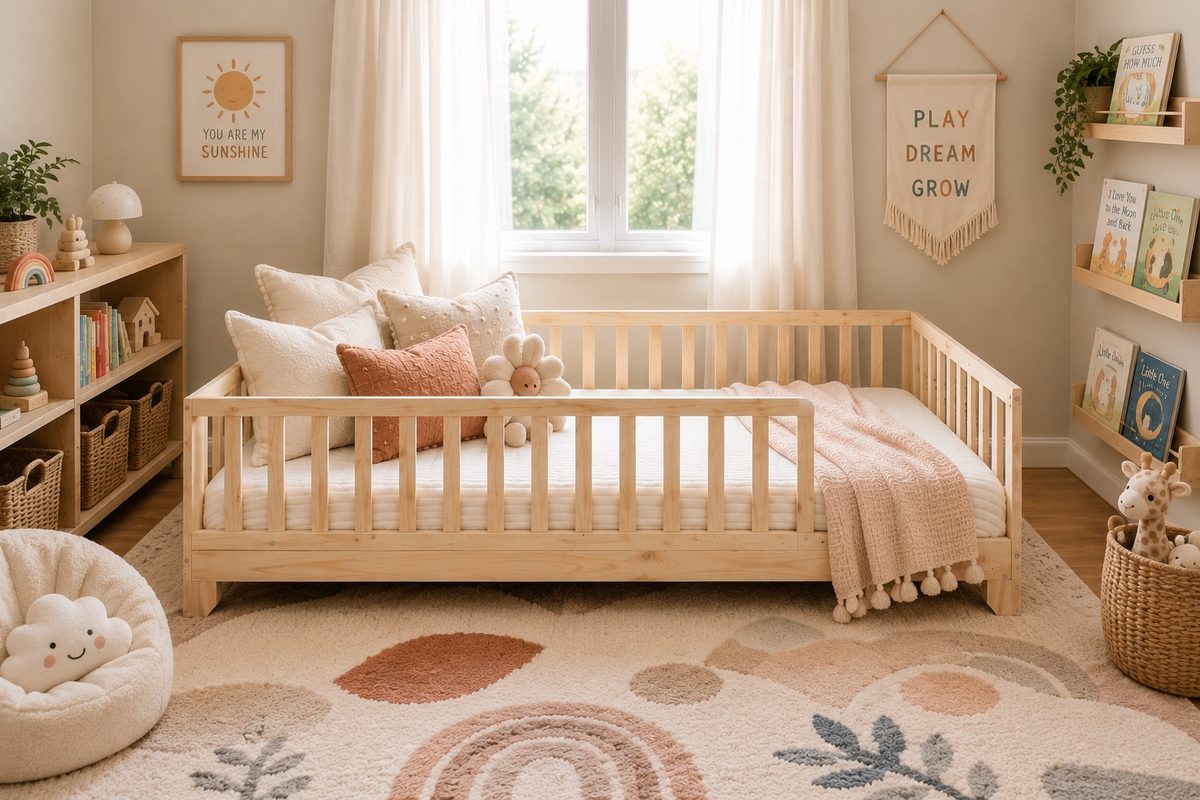
What to Do When Your Toddler Climbs Out of the Crib
You hear a thump.
Then little footsteps.
And suddenly the toddler you tucked into their crib is standing in the hallway looking very proud of themselves.
If this just happened at your house, you’re not alone. A toddler climbing out of the crib can be a sign that your child has reached a new stage of mobility and independence. It can also mean it’s time to reconsider whether the crib is still the right sleep setup for them.
The American Academy of Pediatrics’ parent resource, HealthyChildren.org, advises moving a child to another bed when they can climb out, when they reach approximately 35 inches tall, or when the crib rail is less than about three-quarters of their height.
So if you’ve found yourself searching “my toddler climbed out of the crib—now what?”, this guide is for you.
We’ll walk through what to do after the first crib escape, how to decide whether your toddler may be ready for a bed, how to prepare the bedroom, and what to consider when choosing their first big-kid bed.
If you’re still wondering whether the timing is right, read our companion guide: When Should You Transition Your Toddler Out of the Crib? →
First: Don’t Panic
Watching your toddler attempt a crib escape can be unsettling.
Climbing is also part of developing gross motor skills. Your toddler has discovered something exciting:
They can control where their body goes.
The problem is that the crib that once kept them contained may now give an adventurous toddler something to climb over.
HealthyChildren.org notes that falls commonly occur when children try to climb out of their cribs. Once your child can climb over the rail, it’s worth reassessing whether the crib remains the appropriate place for them to sleep.
The goal generally shouldn’t be to make the crib harder to escape.
The goal is to determine whether your child has reached the point where another sleep setup makes more sense.
7 Signs It May Be Time to Transition Out of the Crib
There isn’t one birthday when every toddler needs to move into a bed. Instead, look at your child’s development, climbing ability, the limits of your specific crib, and their readiness for more independence.
1. Your Toddler Can Climb Out of the Crib
This is one of the clearest signs.
If your toddler has successfully climbed out once, don’t assume it was a one-time event. They now know that getting over the rail is possible.
2. They’re Actively Trying to Climb Over the Rail
You don’t necessarily need to wait for a successful escape.
If you repeatedly see your toddler pulling themselves high against the rail, swinging a leg over the side, or otherwise attempting to climb out, it’s time to take a closer look at the sleep setup.
3. They’ve Reached the Crib Manufacturer’s Height or Use Limit
Check the instructions for your specific crib.
HealthyChildren.org advises moving a child to another bed at approximately 35 inches tall or when the side rail is less than about three-quarters of the child’s height, approximately nipple level.
Read the HealthyChildren.org crib safety guidance →
4. They’re Asking for a Big-Kid Bed
Some toddlers make the decision surprisingly easy.
If your child is fascinated by an older sibling’s bed, regularly asks for a “big bed,” or is excited about having a new sleep space of their own, you may be able to turn the transition into a positive milestone.
5. Your Child Is Becoming More Independent
Toddlerhood often comes with a lot of:
“I do it!”
Your child may want to choose pajamas, pick a bedtime book, climb into bed independently, or participate more actively in the bedtime routine.
A low bed that they can independently enter and exit can complement this stage of growing independence.
6. The Crib Has Become a Bedtime Battle
Bedtime resistance by itself doesn’t necessarily mean your child needs a new bed.
But when resistance appears alongside crib climbing, increased mobility, and a strong desire for independence, it may be another sign that the crib stage is coming to an end.
7. A New Baby Needs the Crib
This is an especially common reason families begin planning the transition.
If you’re expecting another baby and plan to reuse the crib, give your toddler time to adjust to their new bed before the baby takes over the crib when circumstances allow.
Try framing the transition as:
“You get your very own big-kid bed!”
rather than:
“The baby needs your crib.”
That helps make the change feel like something your toddler is gaining rather than something being taken away.
What Should You Do If Your Toddler Climbs Out Tonight?
If you’ve just experienced the first crib escape, start with the immediate environment.
Lower the Crib Mattress if You Haven’t Already
If your crib mattress isn’t already at its lowest manufacturer-approved position, check the crib instructions and adjust it appropriately.
However, if your toddler can already climb out when the mattress is fully lowered, lowering it further isn’t an option and isn’t a long-term solution.
Don’t Add Objects Intended to Stop Climbing
Avoid improvising with bumpers, cushions, pillows, extra padding, or other objects intended to make escape more difficult.
HealthyChildren.org warns against crib bumpers and liners. In addition to other hazards, some toddlers can use them as leverage for climbing.
Read the AAP guidance on crib products to avoid →
Follow Your Crib Manufacturer’s Instructions
Don’t modify the crib or add aftermarket solutions that aren’t approved for your specific model.
Start Planning the Next Sleep Setup
If your child has demonstrated that they can climb out, it’s reasonable to begin preparing for another sleep environment.
If you need help determining whether your child is ready, read When Should You Transition Your Toddler Out of the Crib?
What Kind of Bed Comes After a Crib?
Parents generally have three common options.
Traditional Toddler Bed
A traditional toddler bed typically uses the same mattress size as a full-size crib.
Under the U.S. Consumer Product Safety Commission’s toddler-bed standard, a toddler bed is intended for a child who is at least 15 months old and weighs no more than 50 pounds.
Read the CPSC toddler bed guidance →
Potential advantage: Your child can continue using a familiar crib-size mattress.
Potential drawback: Your child may outgrow the bed relatively quickly.
Standard Twin Bed
Some families choose to skip a traditional toddler bed and move directly to a twin-size bed.
Potential advantage: A twin mattress provides considerably more room to grow and may eliminate another furniture purchase in a few years.
Consideration: Many conventional twin beds sit higher off the floor than the sleep space your toddler is accustomed to.
Low or Montessori-Style Floor Bed
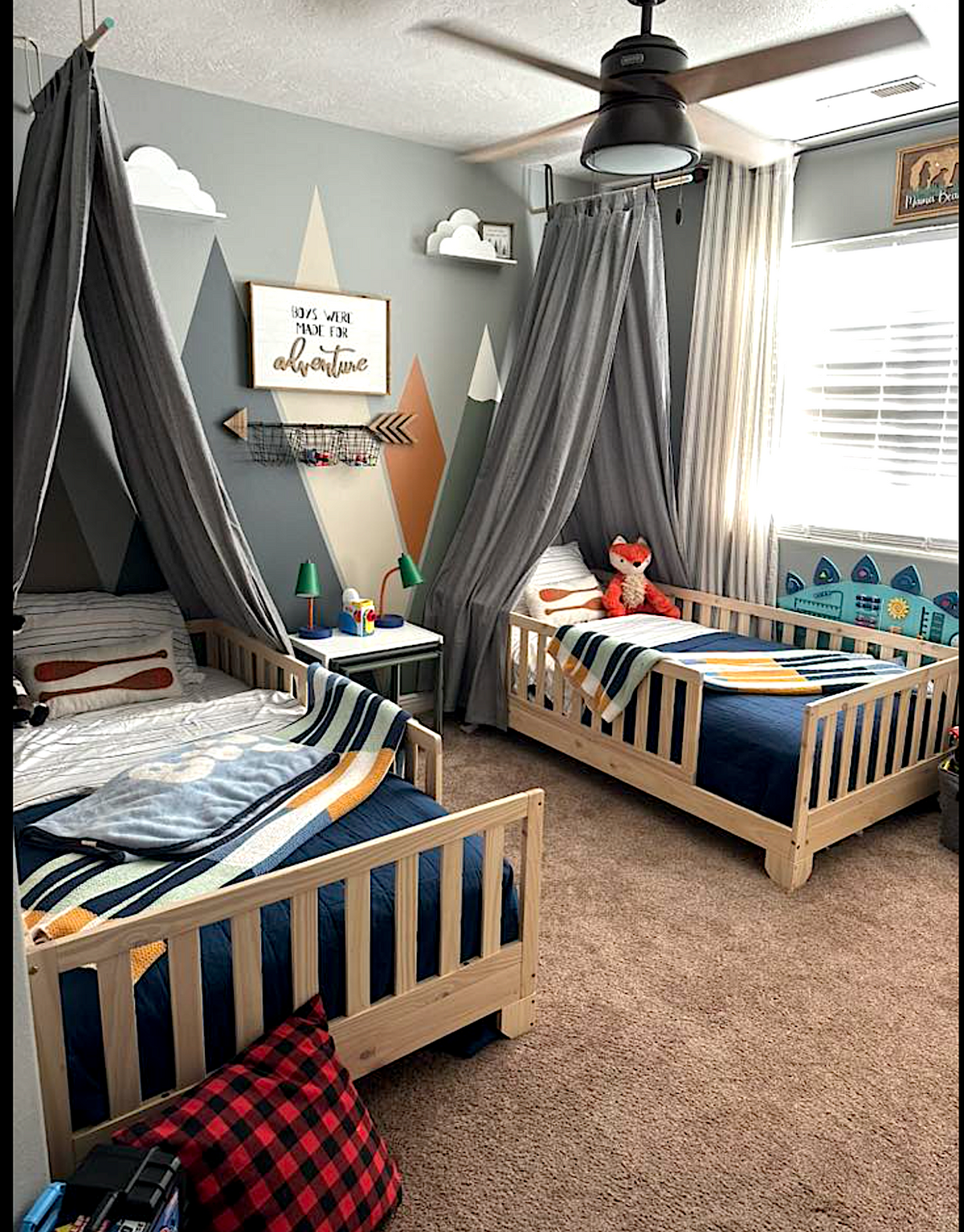
A Montessori-inspired floor bed keeps the sleeping surface low and gives a mobile toddler independent access to their bed.
For many families, this creates a useful middle ground between the enclosed crib and a conventional elevated bed.
You can browse our Montessori floor beds and toddler beds with rails here →
Why a Low Bed Can Help With the Crib-to-Bed Transition
Think about the change from your toddler’s perspective.
Yesterday, they slept surrounded by crib rails.
Today, they may suddenly be expected to sleep in an open, conventional-height bed.
That can feel like a major change.
A thoughtfully designed low bed can provide a middle ground. Your child gains the ability to enter and exit independently while the sleeping surface remains closer to the floor.
A bed with surrounding rails can also provide a more defined sleeping area during the transition.
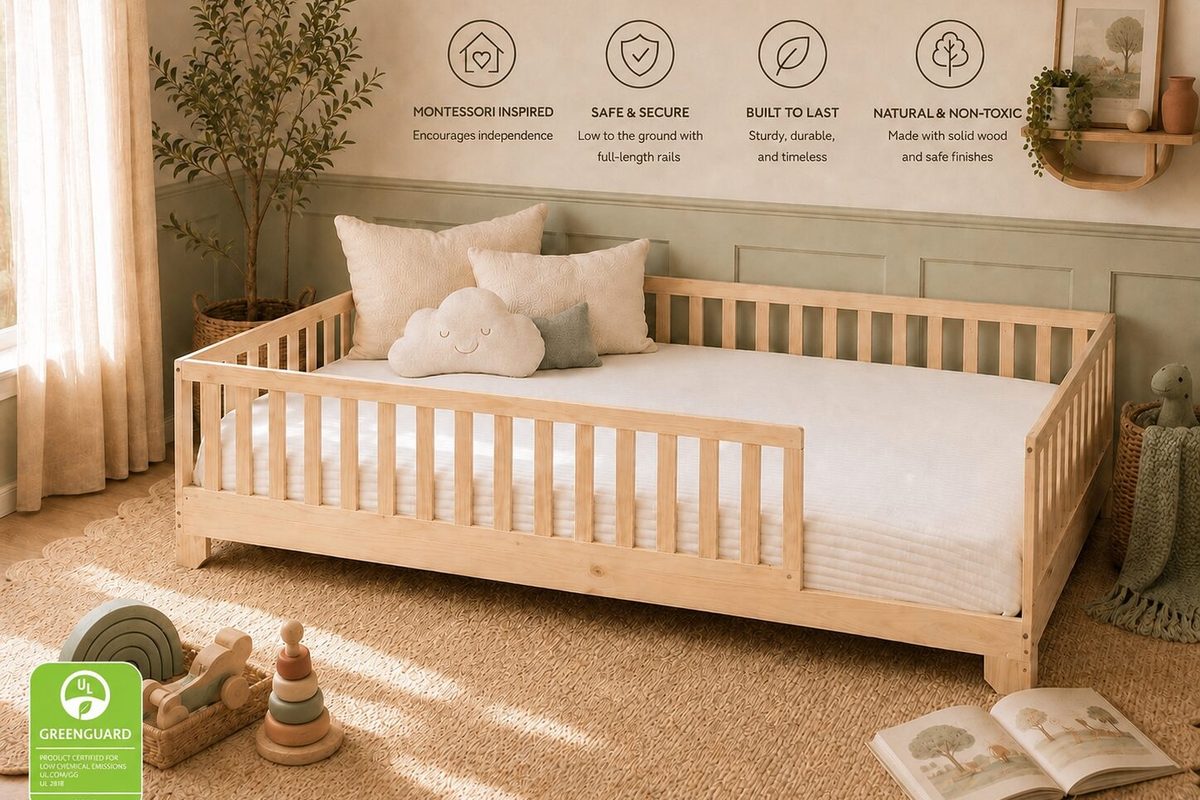
That thinking is behind our Luca Montessori Floor Bed with Rails.
Rather than designing Luca as a bed a child quickly outgrows, we designed it to support the transition from crib to first big-kid bed while providing options that can continue to work as your child grows.

Before the Big-Kid Bed: Toddler-Proof the Entire Bedroom
This may be the most important part of the transition.
When your child sleeps in a crib, the crib is the controlled sleep environment.
Once your child can independently get out of bed:
The entire bedroom becomes part of the accessible environment.
Get down to toddler height and look around the room from your child’s perspective.
Anchor Furniture
Secure dressers, bookcases, and other furniture that could tip according to the manufacturer’s instructions.
Secure Cords
Check for accessible:
- Blind cords
- Curtain cords
- Lamp cords
- Baby monitor cords
- Charging cables
Keep cords inaccessible to your child.
Secure Accessible Electrical Outlets
Use appropriate childproofing products where necessary and check for outlets that become newly accessible once your toddler can freely explore the room.
Secure Windows
Make sure your toddler can’t independently open or climb through a window.
Also look for furniture or toys that could be used as a step to reach one.
Remove Climbing Opportunities
A decorative stool, chair, or toy bin may look very different to an adventurous toddler.
Consider whether objects can be moved to reach windows, dressers, shelving, or other areas you don’t want your child climbing.
Remove Small or Choking Hazards
Remember that your toddler may now be able to explore the room independently while you’re asleep.
Look carefully for small objects and other hazards within reach.
Consider Access Beyond the Bedroom
Think about what happens if your toddler gets out of bed at 2 a.m.
Your childproofing plan should take into account stairs, bathrooms, exterior doors, and other potentially hazardous areas they might be able to access.
How to Make the Crib-to-Bed Transition Easier
Changing the furniture is often easier than changing the routine.
Here are five ways to make the transition feel more familiar.
1. Talk About the New Bed Before It Arrives
Build excitement around the change.
Try:
“You’re getting your very own big-kid bed.”
Instead of:
“You’re too big for your crib.”
The first feels like gaining something new. The second can feel like losing something familiar.
2. Let Your Toddler Explore the Bed During the Day
Don’t make bedtime their first experience with the new bed.
Read books there. Sit together. Let your toddler practice climbing in and out.
The goal is to make the new space familiar before you expect them to sleep there all night.
3. Keep the Rest of the Bedtime Routine Familiar
Keep as many familiar cues as possible:
- Same bath routine
- Same pajamas
- Same books
- Same bedtime song
- Same sound machine
- Same goodnight routine
Change the bed—not everything surrounding bedtime.
4. Expect Them to Get Out of Bed
Your toddler just gained something very exciting:
Freedom.
It’s normal for children to test what that new freedom means.
If your toddler repeatedly gets out of bed, keep your response calm and predictable. Guide them back without turning it into a game or a lengthy interaction.
5. Give the Transition Time
Some children adjust immediately.
Others spend the first few nights testing every square inch of their newly accessible bedroom.
One difficult night doesn’t necessarily predict what bedtime will look like a week later.
Consistency matters more than perfection.
What If My Toddler Sleeps on the Floor?
This surprises a lot of parents.
You create a beautiful new room, make the bed perfectly, and then find your toddler asleep on the rug.
Children sometimes experiment with where they sleep when they first gain more freedom in their room.
If you have concerns about your child’s sleep behavior or whether their sleep environment is appropriate for their age, talk with your pediatrician.
What About Pillows, Blankets and Stuffed Animals?
This is an area where your child’s age matters.
The American Academy of Pediatrics recommends a firm, flat sleep surface without pillows, blankets, stuffed animals, bumpers, or other soft objects for infants.
Moving a young child from a crib to a low bed doesn’t automatically change age-appropriate safe-sleep recommendations.
If your child is very young or you’re unsure what bedding is appropriate, follow current AAP guidance and ask your pediatrician.
How to Choose a Toddler Floor Bed
If you’ve decided that a low bed is right for your family, look beyond the room styling and consider how the bed is actually designed.
- Height: How high is the sleeping surface from the floor?
- Guard rails: How are the rails designed, attached, and spaced?
- Openings: Look carefully at the bed's construction and follow all manufacturer age, mattress, and assembly requirements.
- Materials: What is the frame made from?
- Finish: What paints, stains, or finishes are used?
- Mattress fit: Follow the manufacturer’s mattress-size and thickness requirements.
- Testing and certification: Look for specific independent testing or certifications rather than relying only on broad marketing terms.
- Longevity: Consider whether your child will still be able to use the bed several years from now.
For more options, explore our collection of Montessori floor beds and toddler beds with rails →
Meet Luca: A First Big-Kid Bed Designed to Grow With Them
We designed the Luca Montessori Floor Bed with Rails around exactly this stage of childhood.
The goal is simple: give toddlers more independence while helping parents feel more confident about the transition.
The Luca features:
- A low-profile design
- Surrounding guard rails
- An accessible entry opening
- Solid pine construction
- GREENGUARD Gold certification
- Removable rails as your child grows
- Multiple mattress-size options
- Optional conversion possibilities for longer-term use
Instead of purchasing a bed designed only for a brief toddler stage, families can choose a larger Luca configuration that can continue to evolve with their child.
Explore the Luca Montessori Floor Bed with Rails →
The Crib Escape Isn’t the End of Something
It can feel that way.
One minute you’re assembling a crib for a tiny baby. Then seemingly overnight, that same child has one leg hooked over the rail and plans of their own.
But this stage isn’t just about leaving the crib.
It’s about gaining independence.
Your toddler is beginning to learn:
- I can get into my own bed.
- I can choose my bedtime book.
- I know what happens during my bedtime routine.
- This is my room.
The goal isn’t simply to replace the crib.
It’s to create a sleep environment that works for the child they’re becoming.
And sometimes that first crib escape is the moment that tells you it’s time to start thinking about the next step.
Frequently Asked Questions
What should I do if my toddler keeps climbing out of the crib?
If your toddler can climb out, reassess whether the crib remains an appropriate sleep setup rather than trying to make escape physically impossible. HealthyChildren.org advises moving a child to another bed when they can climb out, reach approximately 35 inches tall, or when the crib rail is less than about three-quarters of their height.
What age should a toddler move out of a crib?
There isn’t one age that applies to every child. Your toddler’s climbing ability, development, height, and the limits of the specific crib matter more than choosing one universal birthday for the transition.
For a more detailed readiness guide, read When Should You Transition Your Toddler Out of the Crib? →
Is 18 months too early for a toddler bed?
Under the CPSC definition, a product regulated as a toddler bed is intended for children at least 15 months old and weighing no more than 50 pounds. That doesn’t mean every 15- or 18-month-old is ready for every type of bed. Consider your child’s development and follow the instructions and age requirements for the specific product you choose.
Should I use a toddler bed or go straight to a twin?
Either option can work. A traditional toddler bed allows you to continue using a crib-size mattress, while a low-profile twin bed can provide considerably more room to grow and may eliminate the need to purchase another bed a few years later.
Are floor beds good for toddlers?
A low bed can give a mobile toddler independent access to their sleep space. The important consideration is choosing an age-appropriate bed, following the manufacturer’s instructions, and making the entire accessible bedroom appropriately childproofed.
How do I stop my toddler from getting out of their new bed?
Expect some boundary testing when your child first gains the freedom to get in and out of bed independently. Keep the bedtime routine consistent and calmly guide your child back to bed without turning it into a lengthy interaction.
What should I toddler-proof before switching from a crib to a bed?
Reassess the entire bedroom, including furniture tip-over hazards, accessible cords, windows, outlets, climbing opportunities, small objects, and your child’s potential access to stairs, bathrooms, and other areas of the home.
Ready to learn more?
Read: When Should You Transition Your Toddler Out of the Crib? →

Leave a comment
This site is protected by hCaptcha and the hCaptcha Privacy Policy and Terms of Service apply.