
When Should You Transition Your Toddler Out of the Crib?
One of the most common questions parents ask during the toddler years is:
“How do I know when it’s time to move my child out of the crib?”
There isn’t one perfect age that works for every child.
Some toddlers happily sleep in a crib well into toddlerhood. Others suddenly discover they can climb over the rail much sooner than their parents expected.
Instead of choosing a transition date based only on age, look at your child’s development, climbing ability, crib limits, and readiness for more independence.

Here are the most important signs it may be time for their first big-kid bed.
1. Your Toddler Can Climb Out of the Crib
This is one of the clearest signs that it may be time to transition.
The American Academy of Pediatrics’ HealthyChildren.org guidance says that once a toddler can climb out of the crib, it may be time to move to a big-kid bed. Crib climbing increases the possibility of falls, which is why parents shouldn’t simply assume the first escape was a one-time event.
Read the HealthyChildren.org crib safety guidance.
If they successfully climbed out once, they now know it can be done.
You may also want to begin planning the transition if your toddler is repeatedly:
- Pulling themselves up over the rail
- Swinging a leg over the side
- Using toys or bedding as a step
- Attempting to climb out during naps or bedtime
You don’t necessarily have to wait for a fall before reassessing the crib.
2. Your Child Is Around 35 Inches Tall
Height matters, too.
HealthyChildren.org recommends moving a child to another bed when they reach approximately 35 inches (89 cm) tall or when the crib side rail is less than about three-quarters of the child’s height—approximately nipple level.
Always check the instructions and limits for your specific crib as well.
3. They’re Becoming Much More Independent
Toddlerhood is full of:
“I do it!”
Your child may suddenly want to:
- Choose their pajamas
- Pick their bedtime book
- Climb into bed independently
- Turn lights on and off
- Help with their bedtime routine
Those behaviors don’t automatically mean the crib has to go, but combined with climbing or reaching the crib’s limits, they can signal that your child is entering a new developmental stage.
A low bed can allow children to get in and out independently rather than relying on a parent to lift them over a crib rail.
4. Your Toddler Is Asking for a Big-Kid Bed
Sometimes children make the decision easier.
If your toddler is fascinated by an older sibling’s bed, regularly asks for a “big bed,” or is excited about having their own new sleeping space, you may be able to turn the transition into a positive milestone.
Instead of saying:
“You’re too big for your crib.”
Try:
“You’re getting your very own big-kid bed!”
The difference is subtle, but one sounds like something familiar is being taken away while the other sounds like something exciting is being gained.
5. A New Baby Is Coming
This is an especially common reason families begin thinking about the crib transition.
If you’re pregnant and plan to use the crib for the new baby, try—when circumstances allow—to make your toddler’s transition before the baby takes over the crib.
That gives your older child time to become comfortable with their new bed before another major family change occurs.
Frame the transition around your toddler growing up rather than the new baby needing their furniture.
Think:
“You get your new big-kid bed.”
Not:
“We need your crib for the baby.”
So, What Is the “Right” Age to Move From a Crib to a Bed?
There is no single birthday when every child needs to move.
Your child’s ability to climb out and the crib manufacturer’s limits are more important than an arbitrary age.
One distinction is worth understanding: under U.S. Consumer Product Safety Commission regulations, a product specifically classified as a toddler bed is designed around a full-size crib mattress and intended for a child who is at least 15 months old and weighs no more than 50 pounds.
Read the U.S. Consumer Product Safety Commission toddler bed guidance.
That definition does not mean every 15-month-old should automatically leave the crib. It describes the intended-use range of products regulated as toddler beds.
Should You Wait Until Your Toddler Climbs Out?
Not necessarily.
Parents sometimes assume they should keep their child in the crib as long as possible and wait for a successful escape before doing anything.
Instead, pay attention to the whole picture.
If your child is nearing the crib’s stated limits, repeatedly attempting to climb out, and becoming increasingly mobile, it makes sense to begin thinking ahead.
Transitioning doesn’t have to happen in a panic the morning after an escape.
You can prepare.
Toddler Bed, Twin Bed or Floor Bed?
Once parents decide the crib stage is ending, the next question is usually:
“What kind of bed should we buy?”
There are three common approaches.
Traditional Toddler Bed
A traditional toddler bed typically uses the same size mattress as a full-size crib.
Advantages:
- Familiar mattress size
- Small footprint
- Usually low to the floor
Consideration:
- Your child may outgrow it relatively quickly.
Standard Twin Bed
Going directly to a twin bed can eliminate another furniture purchase.
Advantages:
- Plenty of room to grow
- Standard mattress size
- Can potentially be used for many years
Consideration:
- Conventional twin beds may sit significantly higher off the floor than a toddler has been accustomed to.
Low or Montessori-Style Floor Bed
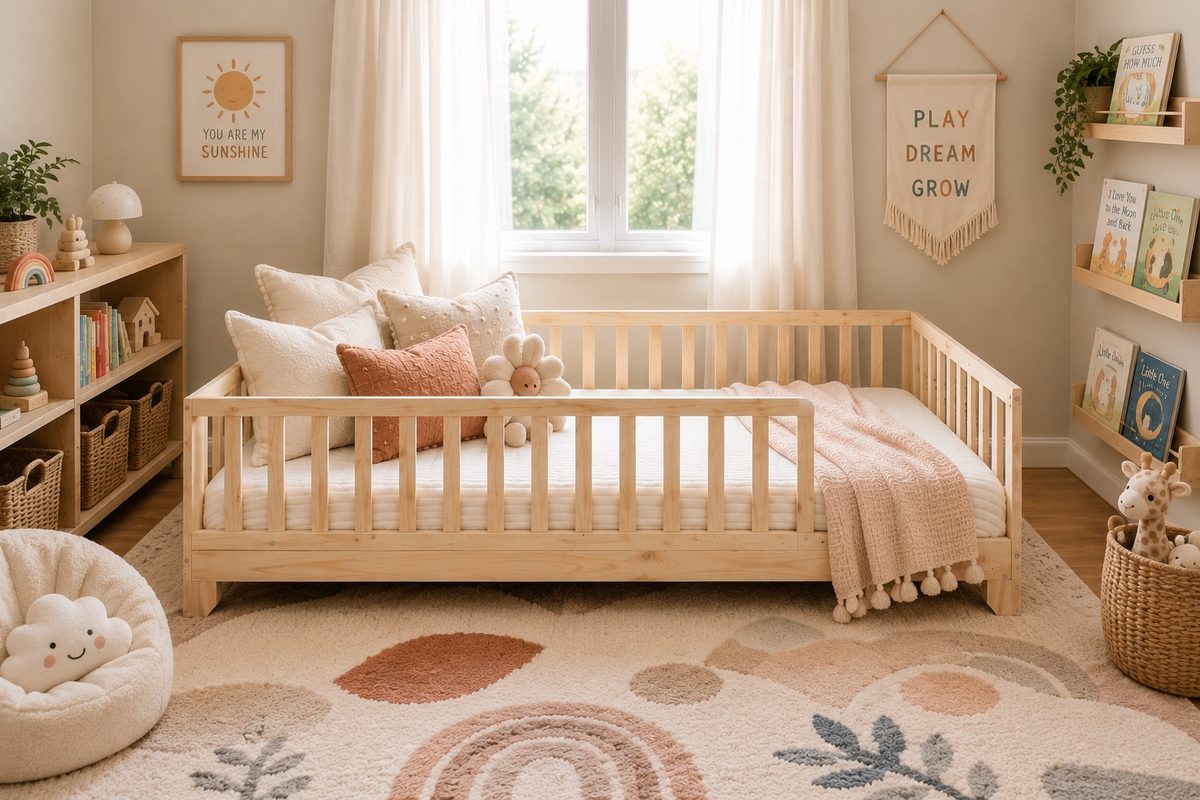
A Montessori-inspired floor bed keeps the sleeping surface low and gives the child independent access.
Advantages:
- Lower sleep surface
- Easier independent entry and exit
- Larger sizes can provide room to grow
- Rails can provide a more defined sleep space when appropriately designed
For many families, this offers a natural middle ground between the enclosed crib and a conventional elevated bed.
Why a Low Bed Can Make the Transition Feel Less Dramatic
Think about this transition from your toddler’s perspective.
One night, they sleep surrounded by crib rails.
The next night, they may be expected to sleep in a completely open bed several inches—or even feet—higher than what they’re accustomed to.
That’s a major environmental change.
A low-profile bed with surrounding rails can give children increased independence while maintaining some of the familiar visual boundaries they had in their crib.
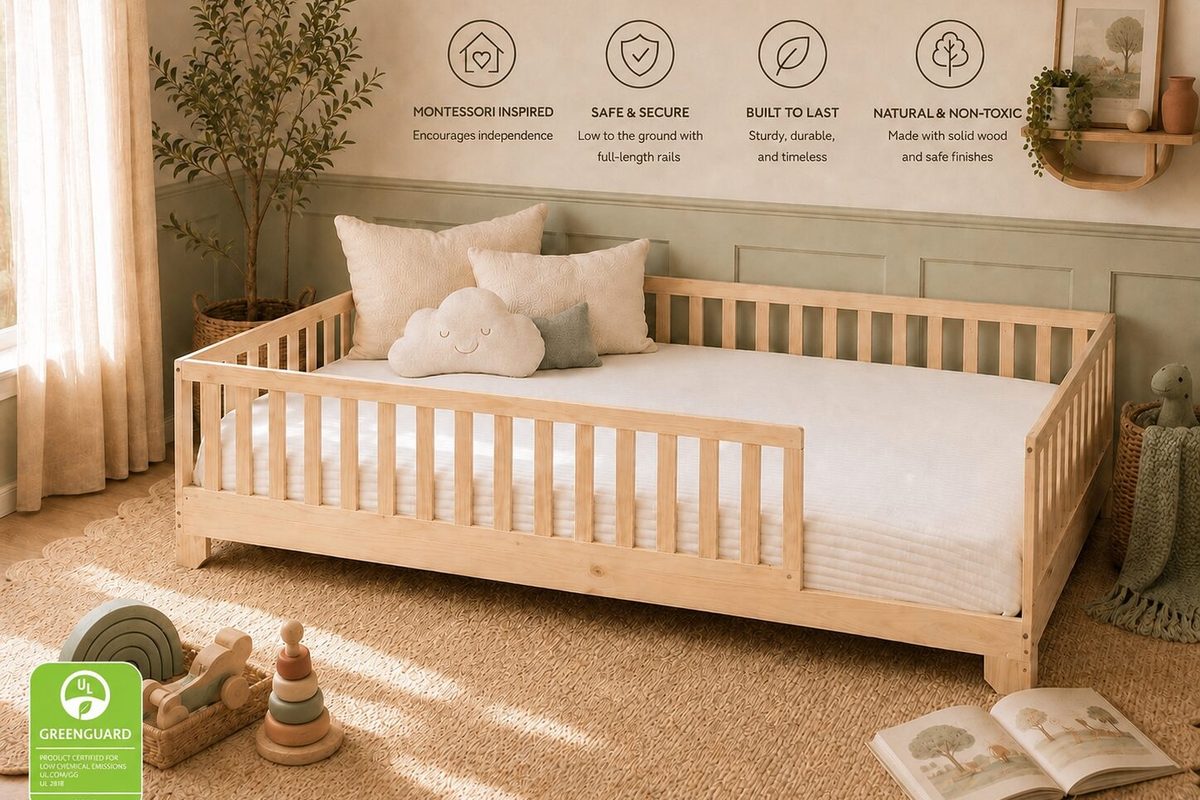
That’s one reason we designed the Luca Montessori Floor Bed with Rails around the crib-to-big-kid transition.
Luca provides:
- A low-profile sleeping space
- Surrounding guard rails
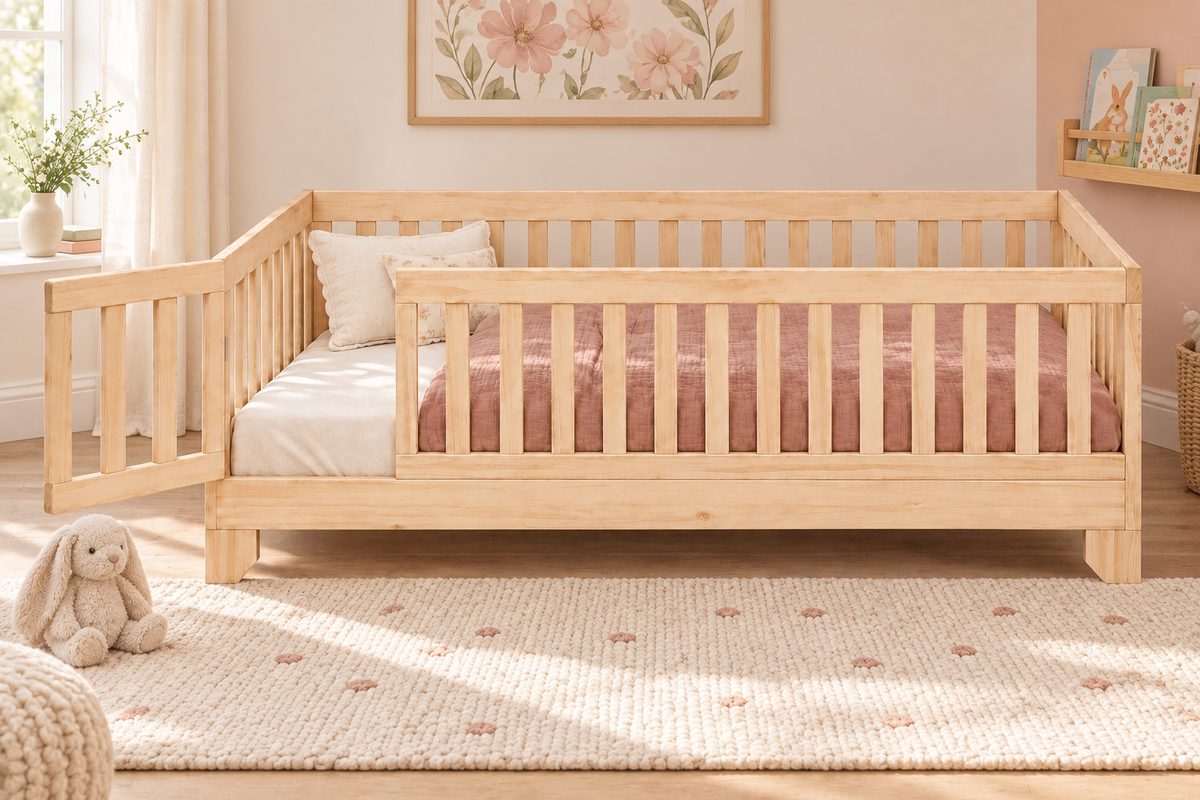
- An accessible opening
- Solid pine construction
- GREENGUARD Gold certification
- Removable rails as your child grows
- Larger mattress-size options for longer-term use
Explore the Luca Montessori Floor Bed with Rails →
Before You Transition: Toddler-Proof the Bedroom
When your child leaves the crib, one important change happens:
The entire bedroom becomes accessible.
That means childproofing becomes even more important.
Before the first night in a bed:
Anchor Furniture
Secure dressers, bookcases and other tip-over hazards according to manufacturer instructions.
Secure Cords
Look carefully at:
- Blind cords
- Curtain cords
- Monitor cords
- Lamp cords
- Charging cables
Keep them inaccessible.
Cover or Secure Accessible Outlets
Check the room from toddler height.
Secure Windows
Make sure your toddler can’t independently open a window or use nearby furniture to reach it.
Remove Climbing Opportunities
That decorative stool or chair may look completely different to an adventurous two-year-old.
Remove Small Hazards
Remember that your child may now be able to explore the bedroom independently before you wake up.
How to Make the Transition Easier
Once the room is ready, keep the actual transition as familiar as possible.
Talk About the New Bed Ahead of Time
Let your toddler know what’s happening before bedtime.
Let Them Explore It During the Day
Read together in the new bed.
Let them climb in and out.
Give them time to become comfortable with it before asking them to sleep there all night.
Keep the Bedtime Routine the Same
HealthyChildren.org recommends continuing the established bedtime routine after moving to a big-kid bed.
Read HealthyChildren.org’s big-kid bed guidance.
Keep familiar:
- Bath time
- Pajamas
- Books
- Songs
- Sound machine
- Goodnight routine
Change the bed—not everything surrounding bedtime.
Expect Some Experimentation
Your toddler just gained a new ability:
They can get out of bed themselves.
They may test it.
If they repeatedly leave the bed, calmly and consistently guide them back without turning it into a long interaction.
A Simple Crib-to-Bed Readiness Checklist
It may be time to start planning the transition if:
- Your toddler can climb out of their crib
- They repeatedly attempt to climb out
- They are approaching the crib’s height or use limits
- They are asking for a big-kid bed
- They show increasing independence
- A new baby is coming and you’ll need the crib
- You want to transition before climbing becomes a safety concern
You don’t need every item on the list.
For many families, climbing alone is enough reason to reassess the crib setup.
Their First Big-Kid Bed Is a Big Milestone
Moving out of the crib can feel surprisingly emotional.
The crib may be one of the last pieces of the baby stage still sitting in your child’s room.
But the transition isn’t simply about replacing a piece of furniture.
It marks something bigger:
Your child is learning to navigate their environment more independently.
They can climb into their own bed.
Choose their own book.
Participate in their own bedtime routine.
And begin making their bedroom truly feel like their space.
There isn't one perfect age to make that change.
The best time is when your child's development, crib limits and safety needs tell you they're ready for the next step.
Explore the Luca Montessori Floor Bed with Rails →
Frequently Asked Questions
What age should a toddler move from a crib to a bed?
There is no single age that applies to every child. Consider their ability to climb out, their height, the manufacturer's crib limits and overall development. HealthyChildren.org recommends transitioning once a child can climb out or reaches approximately 35 inches tall.
Should I move my toddler to a bed as soon as they climb out?
Once a child can climb out, it's appropriate to reassess whether the crib remains the right sleep setup because climbing can create a fall hazard.
Is 18 months too young for a toddler bed?
Federal regulations define toddler beds as products intended for children at least 15 months old and weighing no more than 50 pounds. That doesn't mean every child is ready at 15 or 18 months; development and the specific product instructions still matter.
Should I buy a toddler bed or go straight to a twin?
Either can work. A toddler bed can reuse a crib mattress, while a low-profile twin-size bed may eliminate the need to purchase another bed a few years later.
Should I transition my toddler before a new baby arrives?
When possible, making the transition in advance can give your older child time to become comfortable with their new bed before another major change occurs.
How can I tell if my toddler is ready for a floor bed?
Consider mobility, crib-climbing behavior, developmental readiness and whether you can thoroughly childproof the accessible bedroom. Follow the age and use instructions provided for the specific bed you choose.

Leave a comment
This site is protected by hCaptcha and the hCaptcha Privacy Policy and Terms of Service apply.